Compliance Disclaimer: This article is for informational purposes only and is intended for accredited investors as defined under SEC Regulation D, Rule 506(c). Nothing herein constitutes an offer to sell or a solicitation of an offer to buy any securities or investment products. No performance claims are made. Past results are not indicative of future performance. All investment decisions should be made in consultation with qualified financial, legal, and tax advisors.
A Quiet Revolution in How We Own Things
There is a moment in every technological revolution when the innovation stops being a curiosity and starts being infrastructure. The internet reached that moment sometime around 2000. Mobile computing reached it around 2010. Blockchain-based tokenization of financial assets is reaching it now — and nowhere is this more visible than in the emergence of tokenized equities as the fastest-growing category in the $27.6 billion Real World Asset market.
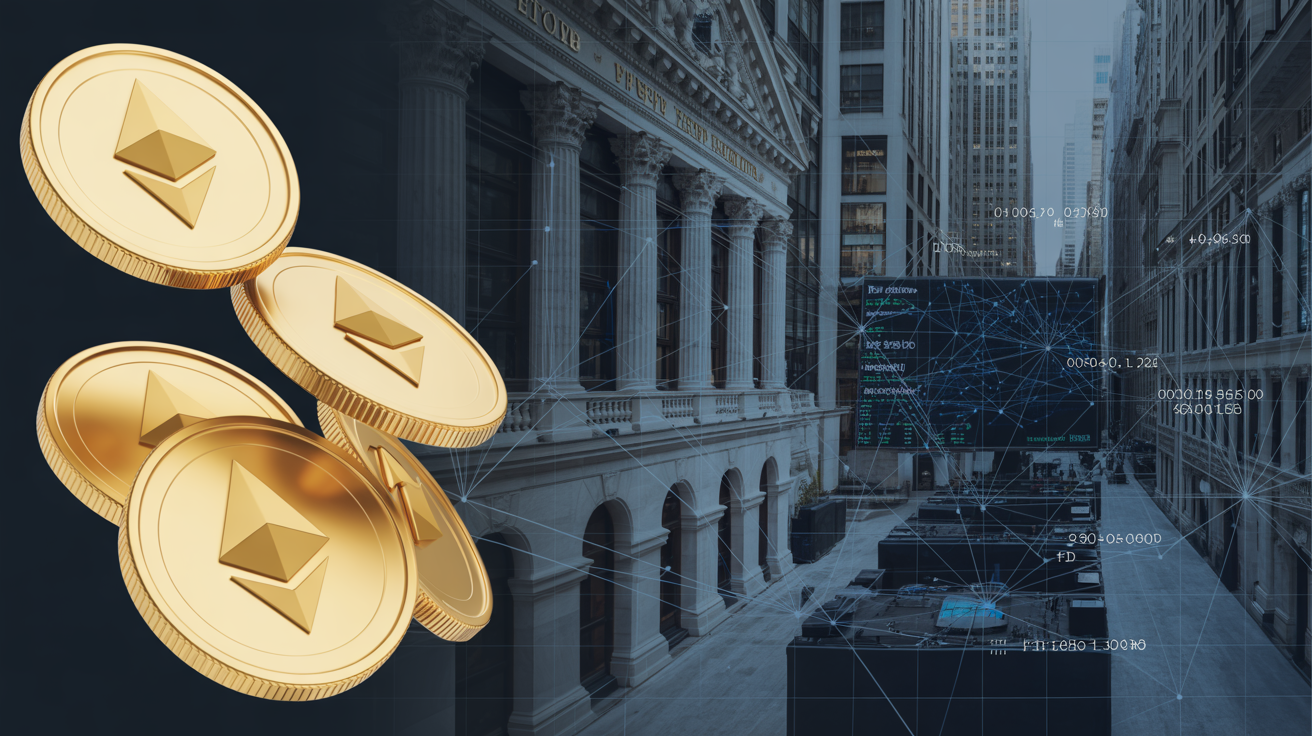
In early 2026, tokenized stocks surpassed $1 billion in distributed value — a nearly 3,000% year-over-year increase. Ondo Global Markets launched with over 100 tokenized U.S. stocks and ETFs. The NYSE is building infrastructure for 24/7 tokenized securities trading. The Depository Trust Company received SEC approval for a tokenization pilot. BlackRock’s ETFs are being tokenized and traded around the clock on blockchain platforms.
This is not a niche experiment. This is the beginning of a fundamental restructuring of how equity ownership works.
The Problem With the Current System (That We’ve Stopped Noticing)

To understand why tokenized equities matter, it helps to step back and examine the absurdity of the current system with fresh eyes.
The New York Stock Exchange closes at 4:00 PM Eastern Time. It is closed on weekends. It is closed on federal holidays. In a world where geopolitical events, earnings releases, and macroeconomic data arrive at all hours — where a central bank decision in Tokyo or a conflict escalation in the Middle East can move markets instantly — the primary mechanism for trading U.S. equities is unavailable for roughly 75% of the hours in a week.
Settlement takes one business day (T+1). This means that when you “buy” a stock, you don’t actually own it for 24 hours. During that window, you carry counterparty risk. The system requires a complex web of brokers, clearinghouses, custodians, and transfer agents to manage this risk — each adding cost, latency, and potential failure points.
Fractional ownership exists as a service layer bolted onto a system designed for whole shares. International investors face currency conversion costs, geographic restrictions, and complex brokerage requirements. The entire architecture was designed for a pre-digital world and has been incrementally patched rather than fundamentally rebuilt.
Tokenized equities are the rebuild.
What Changes When Equity Goes On-Chain
Trading Hours Become Irrelevant
A tokenized equity trades 24 hours a day, 7 days a week, 365 days a year. When NVIDIA announces a breakthrough at 2:00 AM on a Saturday, investors can act immediately. When geopolitical risk spikes on a Sunday evening, portfolios can be rebalanced before Monday’s open. The information-to-action latency that currently defines equity markets — and creates systematic disadvantages for retail and international investors — is eliminated.
Settlement Becomes Atomic
Smart contracts enable atomic settlement: the simultaneous, instantaneous exchange of asset and payment. There is no T+1 window. There is no counterparty risk during settlement. Capital is not tied up in transit. For institutional investors managing large portfolios, the capital efficiency implications are profound.
Compliance Becomes Embedded
Perhaps the most underappreciated innovation is the ability to embed compliance rules directly into the token. Ondo’s use of Solana’s “Transfer Hooks” to enforce investor eligibility rules is a working example: every token transfer automatically verifies that the recipient meets the required criteria. KYC/AML checks, accredited investor verification, transfer restrictions, and lock-up periods can all be enforced at the protocol level — creating compliance that is not just auditable but mathematically guaranteed.
Ownership Becomes Fractional by Default
Native fractionalization means that a single share of a $500 stock can be divided into 500 units of $1 each. This is not a service layer — it is a fundamental property of the token. For institutional investors, this enables precise portfolio construction. For the broader market, it democratizes access to high-value assets.
The Institutional Architects of the New Equity Market

The tokenized equity market is being built by institutions with the credibility and infrastructure to make it permanent.
Ondo Global Markets has emerged as the dominant platform, controlling over 60% of the tokenized equity market with approximately $557 million in assets. Its early 2026 launch of 100+ tokenized U.S. stocks and ETFs — including Apple, NVIDIA, and the SPY ETF — represents the most comprehensive tokenized equity offering available. The platform’s expansion to Solana leverages that network’s low fees and high transaction speeds for retail-accessible trading.
The NYSE is not watching from the sidelines. The exchange is actively building infrastructure for 24/7 trading of tokenized securities, recognizing that the competitive threat from blockchain-based platforms is existential if not addressed proactively.
The DTCC received SEC approval for a pilot to create “digital twins” of securities it holds — effectively tokenizing the existing U.S. equity market infrastructure. When the central securities depository for U.S. markets begins tokenizing its holdings, the transition from traditional to tokenized equity is no longer a question of if but when.
BlackRock’s ETFs — including the world’s largest, the iShares Core S&P 500 ETF (IVV) — are being tokenized and offered on platforms like Ondo. The world’s largest asset manager is not just building tokenized products; its existing products are becoming the underlying assets for the tokenized equity ecosystem.
The Regulatory Foundation: Why 2026 Is the Inflection Point
The explosive growth of tokenized equities in 2026 is not coincidental. It is the direct result of regulatory clarity that has been years in the making.
The SEC’s January 28, 2026 staff statement on tokenized securities established a clear framework: tokenized equities are securities, subject to the same regulatory treatment as their traditional counterparts. This clarity — while it may seem restrictive — is actually the green light that institutional participants needed. It means that a tokenized share of Apple is legally equivalent to a traditional share of Apple. It can be held in custody, used as collateral, and traded on regulated venues with the same legal certainty as any other security.
The SEC-CFTC joint interpretation of March 17, 2026 further clarified the broader digital asset landscape, designating major blockchain networks as digital commodities and providing a coherent framework for the entire ecosystem in which tokenized equities operate.
The DTC tokenization pilot, authorized by the SEC in December 2025, is perhaps the most significant signal of all: the core infrastructure of U.S. capital markets is being upgraded for the tokenized era.
The Savanti Thesis: Building the Future Before It Arrives
At Savanti Investments, we have been operating at the intersection of tokenization and institutional finance since before the current wave of institutional adoption. As the pioneer of The first tokenized equities fund in the United States to trade 24/7 on a regulated ATS exchange, we have built the infrastructure, navigated the regulatory landscape, and developed the operational expertise that the broader market is now racing to acquire.
Our Systematic Global-Macro Equities Fund tokenizes all LP interests as ERC-20 digital securities on Polygon — providing accredited investors with the secondary market optionality, operational transparency, and embedded compliance that define the next generation of fund structures. Our proprietary QuantAI™ platform processes thousands of data feeds to generate systematic signals, while SavantTrade™ executes with sub-millisecond latency.
Our tokens are issued by and offered via secondary market listing on Liquidity.io (a FINRA-member ATS) provides the regulated exchange platform and regulated custody that institutional allocators require — the same model that the NYSE and DTCC are now building toward for the broader equity market.
We did not build this because it was fashionable. We built it because we believed — and continue to believe — that the tokenization of financial assets is the most consequential structural change in capital markets since the introduction of electronic trading. And we deeply believe in the clarity, immutability, speed, security, and transparency on-chain hedge funds provide to their investors.
What Tokenized Equities Mean for the Future of Finance
The $1 billion milestone for tokenized equities is a beginning, not a destination. The trajectory points toward a future where the distinction between “tokenized” and “traditional” equities becomes meaningless — where all equities are tokenized, all settlement is atomic, and all compliance is embedded.
The institutions building this infrastructure today — Ondo, BlackRock, the NYSE, the DTCC, and the pioneers who came before them — are laying the foundation for a financial system that is more efficient, more accessible, and more transparent than anything that has existed before.
For accredited investors evaluating the alternative investment landscape, the question is not whether to engage with tokenized finance. The question is how to engage with it intelligently, within a compliant framework, with partners who have the expertise and infrastructure to navigate the transition.
To explore how Savanti Investments is approaching this opportunity, visit our Insights & Analysis page or contact our investor relations team. For those ready to begin the investment process, our accredited investor onboarding provides a streamlined digital pathway.
The future of equity ownership is being built right now. The only question is whether you are watching it happen or participating in it.
Risk Disclaimer: Investing in private funds and tokenized securities involves substantial risks, including the potential for complete loss of capital, illiquidity, use of leverage, and complex tax consequences. Tokenized securities are subject to all traditional securities rules and regulations, and Savanti’s fund tokens are offered strictly within the 506(c) Regulation D exemption. Tokens are only available to be traded by accredited investors and qualified purchasers on ATS venues which involve additional risks including limited liquidity, price volatility, and evolving regulatory treatment. Past performance, whether actual, simulated, or backtested, is not indicative of future results. This content does not constitute investment advice. Consult your own professional advisors before making any investment decision. Fund interests are offered only to U.S. accredited investors in private placements pursuant to definitive offering documents.