Quantitative macro funds represent a sophisticated segment of the hedge fund industry, employing mathematical models and algorithms to make investment decisions based on macroeconomic trends. These funds typically focus on global economic factors such as interest rates, inflation, and geopolitical events, which can influence asset prices across various markets. Unlike traditional investment strategies that may rely heavily on fundamental analysis or qualitative assessments, quantitative macro funds leverage vast amounts of data to identify patterns and correlations that can inform their trading strategies.
The essence of quantitative macro investing lies in its systematic approach. Fund managers utilize complex algorithms to analyze historical data and forecast future market movements. This data-driven methodology allows for the identification of investment opportunities that may not be immediately apparent through conventional analysis. For instance, a quantitative macro fund might analyze the relationship between commodity prices and currency fluctuations, using this insight to position itself favorably in the market. By relying on quantitative models, these funds aim to minimize human biases and emotional decision-making, striving for a more objective investment process.
Quantitative macro funds have gained significant attention in recent years due to their ability to leverage data-driven strategies for investment decisions. For a deeper understanding of how these funds operate and their impact on the financial markets, you can explore a related article that delves into the intricacies of quantitative investing. This insightful piece can be found at Savanti Investments, where it discusses the methodologies and performance metrics that define successful quantitative macro strategies.
The Role of Data and Analysis in Quantitative Macro Funds
Data serves as the backbone of quantitative macro funds, with managers relying on a diverse array of datasets to inform their investment strategies. This can include economic indicators, market prices, trading volumes, and even social media sentiment. The ability to process and analyze large volumes of data quickly is crucial, as it enables fund managers to react to market changes in real-time. Advanced statistical techniques and machine learning algorithms are often employed to sift through this data, identifying trends and anomalies that can signal potential investment opportunities.
Moreover, the analysis conducted by quantitative macro funds is not limited to historical data; it also encompasses predictive modeling. By employing econometric models, fund managers can forecast future economic conditions based on current data trends. For example, if a model indicates that rising unemployment rates are likely to lead to decreased consumer spending, a quantitative macro fund might adjust its portfolio to reduce exposure to consumer discretionary stocks. This proactive approach allows these funds to stay ahead of market shifts and capitalize on emerging trends before they become widely recognized.
The Impact of Economic Indicators on Quantitative Macro Funds

Economic indicators play a pivotal role in shaping the strategies employed by quantitative macro funds. These indicators, which include metrics such as GDP growth rates, inflation figures, and employment statistics, provide critical insights into the health of an economy. Quantitative macro funds closely monitor these indicators to gauge potential market movements and adjust their positions accordingly. For instance, a sudden increase in inflation may prompt a fund to shift its investments towards commodities or inflation-protected securities.
The interpretation of economic indicators is often nuanced and requires a deep understanding of their implications. For example, while a rise in interest rates might typically signal a tightening monetary policy that could negatively impact equities, a quantitative macro fund might analyze the broader context—such as the reasons behind the rate hike or its expected duration—to determine whether it presents an opportunity for profit. This multifaceted analysis allows these funds to navigate complex economic landscapes effectively.
The Importance of Risk Management in Quantitative Macro Funds
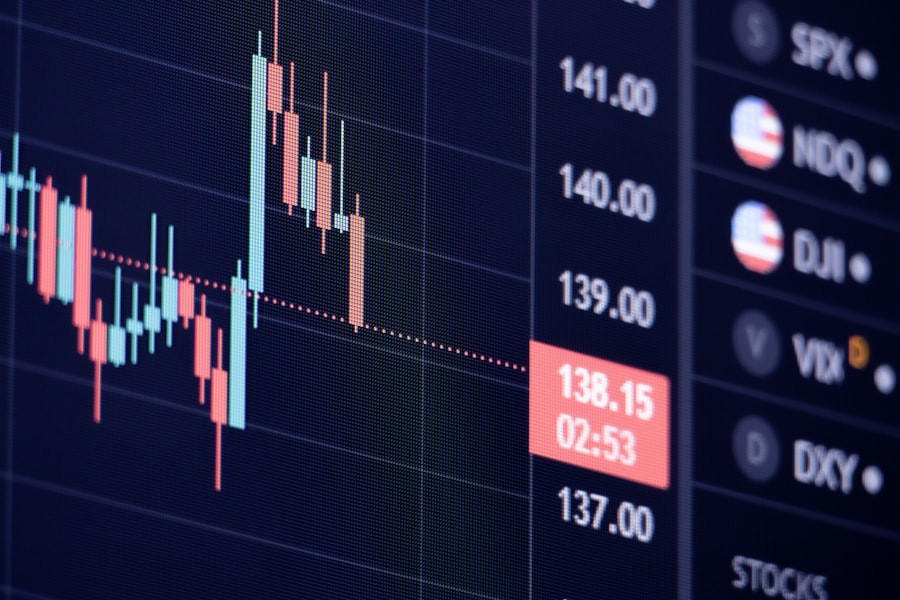
Risk management is a cornerstone of successful investing, particularly in the volatile realm of quantitative macro funds. Given their reliance on complex models and algorithms, these funds must implement robust risk management frameworks to mitigate potential losses. This involves not only monitoring market risks but also understanding model risks—where the assumptions underlying the quantitative models may not hold true in real-world scenarios.
One common risk management strategy employed by quantitative macro funds is diversification across asset classes and geographic regions. By spreading investments across various markets and instruments, these funds can reduce their exposure to any single economic event or market downturn. Additionally, many funds utilize stop-loss orders and other automated trading mechanisms to limit losses when certain thresholds are breached. This disciplined approach to risk management helps ensure that even in adverse market conditions, the fund can preserve capital and maintain its long-term investment strategy.
Quantitative macro funds have gained significant attention in recent years due to their ability to leverage data-driven strategies for investment decisions. These funds utilize complex algorithms and statistical models to analyze economic indicators and market trends, enabling them to capitalize on macroeconomic shifts. For those interested in understanding how technology can enhance investment strategies, a related article discusses the advantages of cloud computing for small businesses, which can also be applicable to investment firms looking to optimize their operations. You can read more about it in this insightful piece on cloud computing.
Leveraging Technology in Quantitative Macro Funds
| Metric | Description | Example Value | Unit |
|---|---|---|---|
| Assets Under Management (AUM) | Total market value of assets managed by the fund | 5,000 | Million USD |
| Annualized Return | Average yearly return over a specified period | 12.5 | % |
| Volatility | Standard deviation of returns, indicating risk | 8.3 | % |
| Sharpe Ratio | Risk-adjusted return measure | 1.45 | Ratio |
| Max Drawdown | Maximum observed loss from a peak to a trough | 15.2 | % |
| Average Holding Period | Average duration positions are held | 30 | Days |
| Number of Positions | Average number of active trades or holdings | 50 | Count |
| Annual Turnover | Percentage of portfolio replaced annually | 120 | % |
Technology is integral to the operation of quantitative macro funds, enabling them to process vast amounts of data and execute trades with remarkable speed and efficiency. High-frequency trading platforms allow these funds to capitalize on minute price discrepancies across markets, executing trades in fractions of a second. This technological edge can be particularly advantageous in fast-moving markets where timing is critical.
Furthermore, advancements in artificial intelligence (AI) and machine learning are revolutionizing the way quantitative macro funds analyze data. These technologies can uncover complex patterns within datasets that traditional analytical methods might overlook. For instance, AI algorithms can analyze news articles and social media posts to gauge market sentiment, providing valuable insights that can inform trading decisions. As technology continues to evolve, quantitative macro funds are likely to become even more adept at leveraging these tools to enhance their investment strategies.
Quantitative macro funds have been gaining attention for their ability to navigate complex market environments through data-driven strategies. As investors seek to understand the evolving landscape of alternative investments, a recent article discusses the significant changes anticipated in 2025 and how these shifts may impact various investment strategies. For more insights on this topic, you can read the article on the changing landscape of alternative investments here.
The Performance of Quantitative Macro Funds in Different Market Conditions
Discover diverse opportunities with Savanti Tokenized Investment Funds designed for modern investors.
The performance of quantitative macro funds can vary significantly depending on prevailing market conditions. In trending markets—whether bullish or bearish—these funds often excel by capitalizing on established price movements through systematic trading strategies. For example, during a strong bull market, a quantitative macro fund might increase its exposure to equities based on models indicating continued upward momentum.
Conversely, during periods of high volatility or market dislocation, the performance of these funds may be challenged. In such environments, rapid price fluctuations can lead to increased model risk as historical relationships between variables may break down. However, many quantitative macro funds are designed with built-in flexibility to adapt their strategies in response to changing market dynamics. This adaptability can allow them to navigate turbulent periods more effectively than traditional investment strategies that may be slower to react.
How Quantitative Macro Funds Differ from Traditional Investment Strategies
Quantitative macro funds stand apart from traditional investment strategies primarily through their reliance on data-driven decision-making rather than subjective judgment. Traditional investment approaches often emphasize fundamental analysis—evaluating a company’s financial health through metrics like earnings reports and balance sheets—while quantitative macro funds focus on broader economic trends and statistical relationships.
Additionally, the time horizon for investments in quantitative macro funds can differ significantly from traditional strategies. Many traditional investors adopt a buy-and-hold philosophy, seeking long-term capital appreciation based on company fundamentals. In contrast, quantitative macro funds may engage in frequent trading based on short-term market signals identified through their models. This active trading approach allows them to exploit transient opportunities that may arise from shifts in economic conditions or market sentiment.
The Future of Quantitative Macro Funds in the Financial Industry
The future of quantitative macro funds appears promising as advancements in technology and data analytics continue to reshape the financial landscape. As more investors recognize the potential benefits of data-driven investing, demand for these funds is likely to grow. Furthermore, the increasing availability of alternative data sources—such as satellite imagery or web traffic analytics—will enhance the ability of quantitative macro funds to derive insights that were previously unattainable.
However, challenges remain for these funds as well. The proliferation of algorithmic trading has led to heightened competition among quant firms, necessitating continuous innovation and refinement of models to maintain an edge in the market. Additionally, regulatory scrutiny surrounding algorithmic trading practices may impact how these funds operate in the future. As the industry evolves, successful quantitative macro funds will need to balance technological advancements with prudent risk management practices to navigate an increasingly complex financial environment.
The Benefits of Investing in Quantitative Macro Funds
Investing in quantitative macro funds offers several advantages for investors seeking diversification and exposure to global economic trends. One key benefit is the potential for enhanced returns through systematic trading strategies that capitalize on short-term market inefficiencies. By leveraging advanced algorithms and data analysis techniques, these funds can identify opportunities that may be overlooked by traditional investors.
Moreover, quantitative macro funds often employ rigorous risk management practices that can help protect investor capital during turbulent market conditions. Their ability to adapt quickly to changing economic environments allows them to mitigate losses more effectively than some traditional investment strategies. Additionally, the transparency associated with quantitative models can provide investors with greater confidence in the decision-making process compared to more opaque traditional approaches.
Common Misconceptions about Quantitative Macro Funds
Despite their growing prominence in the financial industry, several misconceptions persist regarding quantitative macro funds. One common myth is that these funds are solely reliant on complex mathematics and algorithms without any human oversight. In reality, while quantitative models play a crucial role in decision-making, experienced fund managers are essential for interpreting model outputs and making strategic adjustments based on broader market contexts.
Another misconception is that quantitative macro funds are only suitable for institutional investors or high-net-worth individuals due to their perceived complexity and risk profile. However, many quant funds have developed products tailored for retail investors, offering access to sophisticated investment strategies that were once exclusive to elite clientele. This democratization of access allows a broader range of investors to benefit from the unique advantages offered by quantitative macro investing.
Tips for Choosing the Right Quantitative Macro Fund for Your Portfolio
When selecting a quantitative macro fund for your investment portfolio, several factors should be considered to ensure alignment with your financial goals and risk tolerance. First and foremost, it is essential to evaluate the fund’s historical performance relative to its peers and benchmark indices. While past performance is not indicative of future results, it can provide valuable insights into how well the fund has navigated different market conditions.
Additionally, understanding the fund’s investment strategy and risk management practices is crucial. Look for transparency regarding how the fund utilizes data and models in its decision-making process. Assessing the experience and track record of the fund’s management team can also provide reassurance regarding their ability to adapt strategies as market dynamics evolve. Finally, consider fees associated with the fund; while higher fees may be justified by superior performance or unique capabilities, they should be weighed against potential returns carefully.
In conclusion, investing in quantitative macro funds offers a unique opportunity for investors seeking exposure to global economic trends through data-driven strategies. By understanding their mechanics and evaluating options carefully, investors can make informed decisions that align with their financial objectives.
FAQs
What are quantitative macro funds?
Quantitative macro funds are investment funds that use mathematical models and algorithms to analyze macroeconomic data and trends. They aim to identify trading opportunities across global markets by applying systematic, data-driven strategies rather than relying on discretionary judgment.
How do quantitative macro funds differ from traditional macro funds?
Traditional macro funds often rely on the experience and intuition of portfolio managers to make investment decisions based on economic and political developments. In contrast, quantitative macro funds use computer models and statistical techniques to process large datasets and execute trades systematically, reducing human bias.
What types of data do quantitative macro funds analyze?
These funds analyze a wide range of data, including economic indicators (GDP, inflation, employment), interest rates, currency exchange rates, commodity prices, and geopolitical events. They may also incorporate alternative data sources such as satellite imagery or social media sentiment to enhance their models.
What are the advantages of investing in quantitative macro funds?
Advantages include the ability to process vast amounts of data quickly, consistent application of investment strategies, reduced emotional decision-making, and potential to exploit complex market inefficiencies. Additionally, their systematic approach can provide diversification benefits within a broader investment portfolio.
What risks are associated with quantitative macro funds?
Risks include model risk, where the algorithms may fail to predict market changes accurately; data quality issues; overfitting to historical data; and market conditions that differ significantly from those used to develop the models. Additionally, these funds may experience periods of underperformance during unexpected economic events.