Quantitative crypto hedge funds represent a unique intersection of traditional finance and the burgeoning world of cryptocurrencies. These funds employ quantitative analysis, which involves the use of mathematical models and statistical techniques to identify trading opportunities and manage investment portfolios. Unlike traditional hedge funds that may rely heavily on qualitative assessments or fundamental analysis, quantitative crypto hedge funds leverage vast amounts of data to inform their strategies. This data-driven approach allows them to make decisions based on empirical evidence rather than subjective judgment, which can be particularly advantageous in the highly volatile and rapidly changing crypto market.
The operational framework of quantitative crypto hedge funds typically involves sophisticated algorithms that analyze market trends, price movements, and trading volumes across various cryptocurrencies. By employing these algorithms, fund managers can execute trades at speeds and frequencies that are unattainable for human traders. This capability is crucial in the crypto space, where price fluctuations can occur within seconds. Furthermore, quantitative hedge funds often utilize high-frequency trading (HFT) strategies, which involve executing a large number of orders at extremely high speeds to capitalize on small price discrepancies. This method not only enhances liquidity in the market but also allows these funds to generate returns that might be missed by traditional investment strategies.
For those interested in the intricacies of quantitative crypto hedge funds, a valuable resource can be found in the article available at Savanti Investments, which addresses frequently asked questions about investment strategies and the unique challenges faced in the cryptocurrency market. This article provides insights into how quantitative methods can enhance decision-making and risk management in crypto investments.
The Role of Data and Analysis in Quantitative Crypto Hedge Funds
Data is the lifeblood of quantitative crypto hedge funds. These funds rely on a diverse array of data sources, including historical price data, trading volumes, social media sentiment, and macroeconomic indicators. The ability to aggregate and analyze this data effectively is what sets successful quantitative hedge funds apart from their competitors. For instance, many funds utilize advanced data analytics tools to process large datasets, enabling them to identify patterns and correlations that may not be immediately apparent. This analytical prowess allows fund managers to develop predictive models that can forecast future price movements based on historical trends.
Moreover, the integration of alternative data sources has become increasingly important in the crypto space. For example, sentiment analysis derived from social media platforms like Twitter or Reddit can provide insights into market sentiment and potential price movements. By analyzing the frequency and sentiment of discussions surrounding specific cryptocurrencies, quantitative hedge funds can gauge investor sentiment and adjust their strategies accordingly. This multifaceted approach to data analysis not only enhances the accuracy of predictions but also allows for a more nuanced understanding of market dynamics.
Leveraging Mathematical Models for Investment Strategies

Mathematical models serve as the backbone of investment strategies employed by quantitative crypto hedge funds. These models are designed to quantify risk and return, allowing fund managers to make informed decisions based on statistical probabilities. Commonly used models include the Black-Scholes model for options pricing, the Capital Asset Pricing Model (CAPM), and various forms of regression analysis. Each model provides a framework for understanding the relationship between different variables in the market, enabling fund managers to optimize their portfolios.
One notable application of mathematical modeling in crypto hedge funds is the development of algorithmic trading strategies based on mean reversion or momentum trading principles. Mean reversion strategies operate on the premise that asset prices will tend to revert to their historical averages over time. By identifying overbought or oversold conditions in the market, quantitative hedge funds can execute trades that capitalize on these price corrections. Conversely, momentum trading strategies focus on identifying assets that are trending in a particular direction and capitalizing on that trend until it shows signs of reversal. By employing these mathematical models, quantitative hedge funds can systematically exploit inefficiencies in the market.
Implementing Risk Management in Quantitative Crypto Hedge Funds
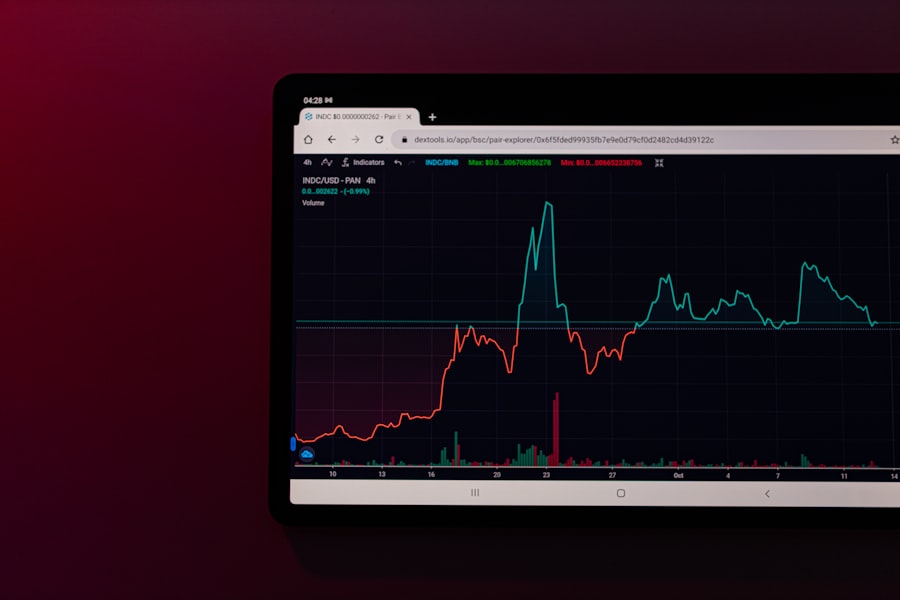
Risk management is a critical component of any investment strategy, and it takes on heightened importance in the context of cryptocurrency markets, which are characterized by extreme volatility. Quantitative crypto hedge funds employ a variety of risk management techniques to mitigate potential losses while maximizing returns. One common approach is the use of Value at Risk (VaR) models, which estimate the potential loss an investment portfolio could face over a specified time frame with a given confidence level. By quantifying risk in this manner, fund managers can make more informed decisions about position sizing and leverage.
In addition to VaR, many quantitative hedge funds implement stop-loss orders as a means of protecting their investments from significant downturns. A stop-loss order automatically triggers a sale when an asset reaches a predetermined price point, thereby limiting potential losses. Furthermore, diversification across various cryptocurrencies can also serve as an effective risk management strategy. By spreading investments across multiple assets with varying levels of correlation, fund managers can reduce overall portfolio risk while still capturing potential upside from individual assets.
In the ever-evolving landscape of cryptocurrency investments, quantitative crypto hedge funds are gaining significant attention for their data-driven strategies and risk management techniques. A related article that delves into the broader implications of market trends and investment strategies is available at Savanti Investments, where insights on the global macroeconomic outlook for 2025 can provide valuable context for understanding the potential of these innovative funds. As investors seek to navigate the complexities of the crypto market, such resources become essential for informed decision-making.
Utilizing Machine Learning and Artificial Intelligence in Crypto Hedge Funds
| Metric | Description | Example Value | Unit |
|---|---|---|---|
| Assets Under Management (AUM) | Total value of assets managed by the fund | 500 | Million |
| Annualized Return | Average yearly return generated by the fund | 18 | Percent |
| Sharpe Ratio | Risk-adjusted return measure | 1.5 | Ratio |
| Maximum Drawdown | Largest peak-to-trough decline in portfolio value | 12 | Percent |
| Volatility | Standard deviation of returns | 20 | Percent |
| Average Holding Period | Average duration of asset holdings | 3 | Days |
| Number of Trades per Month | Average trades executed monthly | 150 | Trades |
| Correlation to Bitcoin | Correlation coefficient with Bitcoin returns | 0.35 | Coefficient |
The advent of machine learning (ML) and artificial intelligence (AI) has revolutionized the landscape of quantitative crypto hedge funds. These technologies enable fund managers to analyze vast datasets more efficiently and uncover complex patterns that traditional analytical methods might miss. For instance, machine learning algorithms can be trained on historical price data to identify predictive signals that inform trading decisions. This capability allows for more adaptive strategies that can evolve as market conditions change.
Moreover, AI-driven sentiment analysis tools can process unstructured data from social media and news articles to gauge public sentiment towards specific cryptocurrencies. By integrating this sentiment data into their trading models, quantitative hedge funds can enhance their predictive accuracy and responsiveness to market shifts. Additionally, reinforcement learning—a subset of machine learning—can be employed to optimize trading strategies by simulating various scenarios and learning from past outcomes. This iterative process allows fund managers to refine their approaches continuously, leading to improved performance over time.
In the rapidly evolving landscape of cryptocurrency investment, quantitative crypto hedge funds are gaining traction for their ability to leverage data-driven strategies to maximize returns. A fascinating read on this topic can be found in the article about how Savanti’s innovative securities are transforming the financial sector. By exploring the intersection of technology and finance, this piece highlights the unprecedented investment opportunities that arise from such innovations. For more insights, you can check out the article here.
The Importance of Market Timing and Execution in Quantitative Crypto Hedge Funds
Explore diverse opportunities with Savanti’s Tokenized Investment Funds to enhance your portfolio.
Market timing and execution are paramount considerations for quantitative crypto hedge funds seeking to maximize returns. Given the rapid pace at which cryptocurrency prices can fluctuate, the ability to execute trades swiftly and efficiently is crucial. High-frequency trading platforms equipped with advanced algorithms allow these funds to capitalize on fleeting opportunities that may arise within milliseconds. The precision of execution can significantly impact profitability; even minor delays can result in missed opportunities or increased slippage.
Furthermore, effective market timing involves not only executing trades at optimal prices but also understanding broader market trends and cycles. Quantitative hedge funds often employ technical analysis tools to identify key support and resistance levels, trend lines, and other indicators that inform entry and exit points for trades. By combining these technical insights with their quantitative models, fund managers can enhance their ability to time trades effectively while minimizing exposure to adverse market movements.
Leveraging Statistical Arbitrage in Crypto Hedge Funds
Statistical arbitrage is a popular strategy employed by quantitative crypto hedge funds that seeks to exploit pricing inefficiencies between correlated assets. This approach involves identifying pairs or groups of cryptocurrencies that historically move together but have diverged in price due to temporary market anomalies. By taking long positions in undervalued assets while simultaneously shorting overvalued ones, fund managers aim to profit from the eventual convergence of prices.
For example, if two cryptocurrencies typically maintain a stable price ratio but one experiences a sudden spike due to speculative trading, a statistical arbitrage strategy would involve shorting the overvalued asset while going long on the undervalued one. As prices revert to their historical relationship, the fund stands to gain from both positions. This strategy requires sophisticated statistical modeling and real-time data analysis capabilities to identify opportunities quickly and execute trades efficiently.
The Role of Algorithmic Trading in Maximizing Returns
Algorithmic trading plays a pivotal role in maximizing returns for quantitative crypto hedge funds by automating trade execution based on predefined criteria. These algorithms can analyze market conditions continuously and execute trades at optimal times without human intervention. This automation not only enhances efficiency but also reduces emotional biases that can cloud judgment during trading decisions.
Moreover, algorithmic trading systems can be programmed to incorporate various strategies simultaneously, allowing fund managers to diversify their approaches without increasing operational complexity. For instance, an algorithm might simultaneously execute momentum trades while also engaging in statistical arbitrage across different cryptocurrency pairs. This multifaceted approach enables quantitative hedge funds to capture a broader range of opportunities while managing risk effectively.
Evaluating Performance Metrics in Quantitative Crypto Hedge Funds
Performance evaluation is essential for assessing the effectiveness of investment strategies employed by quantitative crypto hedge funds. Common metrics used include Sharpe ratio, Sortino ratio, maximum drawdown, and alpha generation. The Sharpe ratio measures risk-adjusted returns by comparing excess returns over a risk-free rate relative to portfolio volatility. A higher Sharpe ratio indicates better risk-adjusted performance.
The Sortino ratio is similar but focuses specifically on downside risk, making it particularly relevant in volatile markets like cryptocurrencies where downside protection is crucial. Maximum drawdown quantifies the largest peak-to-trough decline in portfolio value during a specified period, providing insight into potential risks associated with an investment strategy. Alpha generation measures the excess return generated by a fund relative to its benchmark index, indicating how well a fund manager has performed compared to passive investment strategies.
Overcoming Challenges and Volatility in the Crypto Market
The cryptocurrency market is notorious for its volatility, presenting both challenges and opportunities for quantitative crypto hedge funds. Sudden price swings can lead to significant gains or losses within short timeframes, necessitating robust risk management practices and adaptive strategies. One challenge faced by these funds is the lack of historical data compared to traditional asset classes; many cryptocurrencies are relatively new, making it difficult to develop reliable predictive models based on historical performance.
Additionally, regulatory uncertainty poses another challenge for quantitative crypto hedge funds as governments around the world grapple with how to regulate digital assets effectively. Changes in regulations can impact market dynamics significantly, leading to abrupt shifts in investor sentiment and trading behavior. To navigate these challenges successfully, quantitative hedge funds must remain agile and continuously refine their strategies based on evolving market conditions while maintaining a strong focus on risk management.
The Future of Quantitative Crypto Hedge Funds and Emerging Trends
As the cryptocurrency landscape continues to evolve rapidly, so too will the strategies employed by quantitative crypto hedge funds. One emerging trend is the increasing integration of decentralized finance (DeFi) protocols into investment strategies. DeFi platforms offer innovative financial products such as yield farming and liquidity provision that present new opportunities for generating returns outside traditional trading methods.
Furthermore, advancements in blockchain technology are likely to enhance transparency and security within the crypto space, potentially attracting more institutional investors into this asset class. As institutional participation grows, quantitative hedge funds may adapt their strategies to accommodate larger capital flows while maintaining their competitive edge through advanced analytics and machine learning techniques.
In conclusion, quantitative crypto hedge funds are poised for continued growth as they leverage data-driven approaches and innovative technologies to navigate the complexities of the cryptocurrency market. By embracing emerging trends and refining their strategies in response to evolving market dynamics, these funds will play an increasingly vital role in shaping the future of digital asset investment.
Savanti Systematic Global Macro Fund
FAQs
What is a quantitative crypto hedge fund?
A quantitative crypto hedge fund is an investment fund that uses mathematical models, algorithms, and data analysis to make trading decisions in the cryptocurrency markets. These funds rely on quantitative strategies rather than traditional discretionary trading.
How do quantitative crypto hedge funds differ from traditional hedge funds?
Quantitative crypto hedge funds primarily focus on cryptocurrencies and use automated, data-driven trading strategies. Traditional hedge funds may invest in a broader range of assets and often rely on human judgment and fundamental analysis alongside quantitative methods.
What types of strategies do quantitative crypto hedge funds use?
These funds employ various strategies such as statistical arbitrage, trend following, market making, and machine learning models to identify trading opportunities and manage risk in the volatile crypto markets.
What are the risks associated with investing in a quantitative crypto hedge fund?
Risks include market volatility, model risk (where algorithms may fail under certain conditions), liquidity risk, regulatory uncertainty in the crypto space, and operational risks related to technology and cybersecurity.
Who typically invests in quantitative crypto hedge funds?
Investors often include institutional investors, high-net-worth individuals, and family offices seeking exposure to cryptocurrency markets through sophisticated, algorithm-driven investment approaches.