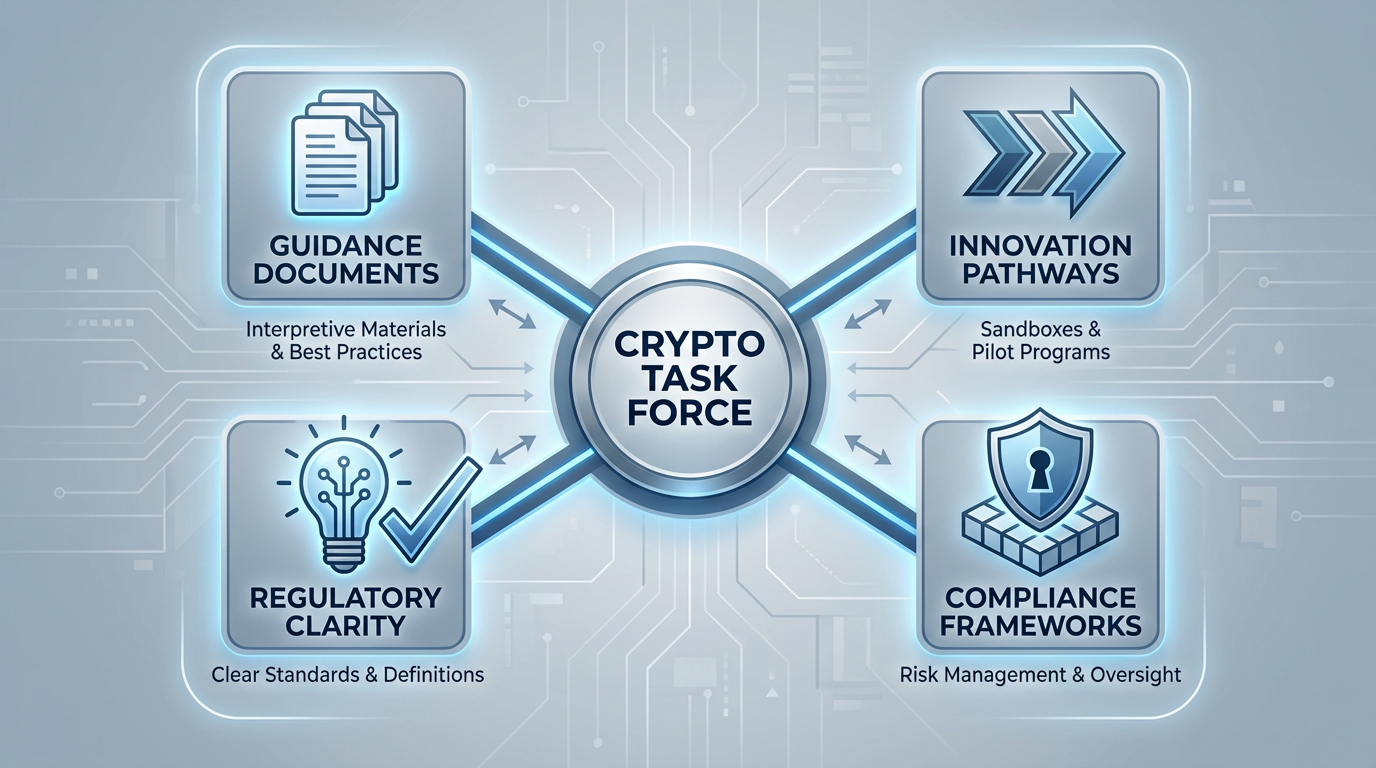
Published by the Savanti Investments Research Desk | Week Ending March 23, 2026
Executive Summary
The week of March 17–23, 2026 will be remembered as one of the most consequential in the history of digital asset regulation. The U.S. Securities and Exchange Commission (SEC) and the Commodity Futures Trading Commission (CFTC) jointly released a landmark 68-page interpretive document on March 17th — explicitly classifying 16 major cryptocurrencies as digital commodities, not securities. After more than a decade of regulatory ambiguity that constrained institutional capital and stifled product development, the federal government drew its lines in clear, enforceable terms.
Against that historic backdrop, Bitcoin endured its most turbulent week since February, swinging from a high of $75,000 on Monday’s short squeeze to a weekly low near $68,150 before recovering above $70,500 as geopolitical risks momentarily eased. The Crypto Fear & Greed Index fell to 15 — Extreme Fear — even as prices held well above their 2025 lows, a classic sentiment-price divergence that sophisticated investors have historically used to their advantage.
Meanwhile, institutional infrastructure continued its quiet but relentless buildout: Bitmine added another $138 million in Ethereum to its treasury, XRP spot ETFs continued their remarkable inflow streak, and on-chain real-world asset (RWA) tokenization surpassed $23.6 billion in total value — up 66% in 2026 alone. This is not a bull run. This is the construction of a new financial system, happening in real time.
Below is Savanti’s full institutional-grade breakdown of the week’s most consequential developments.
I. The Week’s Defining Moment: The SEC & CFTC Joint Token Taxonomy
On March 17, 2026, the SEC released its most consequential crypto guidance in its history — a 68-page joint interpretive document coordinated with the CFTC that formally defines how federal securities laws apply to crypto assets. SEC Chairman Paul S. Atkins stated plainly: “After more than a decade of uncertainty, this interpretation will provide market participants with a clear understanding of how the Commission treats crypto assets under federal securities laws. This is what regulatory agencies are supposed to do: draw clear lines in clear terms.”
The document establishes a four-category taxonomy for digital assets:
- Digital Commodities — Decentralized assets without an issuer bearing ongoing obligations. These are not securities and fall under CFTC jurisdiction.
- Digital Collectibles — NFTs and similar items representing ownership of unique digital goods.
- Digital Tools — Tokens that grant access to a software platform or service.
- Digital Securities — The only category still subject to SEC securities laws. Critically, this means only tokenized versions of traditional securities remain within the SEC’s securities framework.
The interpretation explicitly named 16 cryptocurrencies as digital commodities: Bitcoin (BTC), Ethereum (ETH), XRP, Dogecoin (DOGE), Solana (SOL), Cardano (ADA), Bitcoin Cash (BCH), Aptos (APT), Avalanche (AVAX), Hedera (HBAR), Litecoin (LTC), Polkadot (DOT), Shiba Inu (SHIB), Stellar (XLM), Tezos (XTZ), and Chainlink (LINK).
For the first time in the digital asset era, staking, mining, and airdrops are also formally classified as activities outside securities law — clearing one of the most persistent legal gray areas for both retail participants and institutional operators.
The significance of this cannot be overstated. For years, the SEC’s application of the 80-year-old Howey Test to crypto assets created a regulatory environment where virtually any token could theoretically be deemed a security, creating enormous legal risk for projects, exchanges, funds, and institutional investors alike. That framework is now formally retired for the 16 named assets and structurally weakened for the broader ecosystem.
On the same day, Chairman Atkins delivered remarks at the agency’s “Token Safe Harbor” roundtable, proposing a broader principles-based regulatory framework that replaces prescriptive, checklist-driven securities standards with broad principles such as disclosure and investor protection — standards that are technology-neutral and better suited to decentralized systems.
For Savanti, and for every institutional participant in this space, this is the single most important regulatory development of the decade. It creates the legal foundation for a generation of new products: multi-asset crypto ETFs, institutional staking vehicles, tokenized commodities funds, and digital asset lending structures that were previously untenable under securities law uncertainty.
II. Legislative Momentum: The CLARITY Act Inches Forward
Complementing the SEC’s interpretive action, the Senate made notable progress on the CLARITY Act — the sweeping cryptocurrency legislation that would codify much of the SEC/CFTC taxonomy into statute and establish a comprehensive federal licensing framework for digital asset markets.
The key sticking point in recent weeks had been the treatment of yield-bearing stablecoins — specifically, whether stablecoin rewards offered by exchanges should be regulated as deposit alternatives subject to banking law. A tentative compromise between Republican Senator Thom Tillis and Democratic Senator Angela Alsobrooks on the yield provisions has reportedly cleared the way for the bill to advance to the Senate Banking Committee.
Policy experts tracking the bill are clear about the timeline pressure: the legislation must clear the Senate Banking Committee by the end of April 2026 to maintain a credible path to enactment this year. If that window is missed, the probability of passage in 2026 drops sharply given the legislative calendar.
For investors and market participants, the CLARITY Act’s passage would represent a step-change in market accessibility. It would unlock registered broker-dealer and custody frameworks specifically designed for digital assets, create a pathway for regulated tokenized securities trading, and establish a federal standard that currently patchwork state-by-state frameworks cannot provide.
We continue to monitor this closely. The regulatory environment is moving faster than at any point in the asset class’s history, and Savanti’s investment thesis is predicated in part on the value unlocked by this transition from regulatory uncertainty to institutional-grade clarity.
III. Bitcoin Market Analysis: Volatility, Miner Capitulation & Geopolitical Crosscurrents
Bitcoin’s price action this week was a study in macro-driven volatility layered over structural supply dynamics. The week opened with an explosive short squeeze that drove BTC from approximately $70,000 to a high of $75,000 on Monday, March 17 — liquidating over $177 million in short positions in a matter of hours and generating the largest single-day short liquidation event since November 2024.
The euphoria was short-lived. The Federal Reserve’s March 18 communications around persistent inflation concerns triggered a broad risk-asset selloff, with Bitcoin falling roughly 9% from its peak to approximately $68,150 by Saturday, March 22. The crypto market saw over $400 million in total liquidations across long and short positions for the week, reflecting the elevated leverage that had built up during February’s relative calm.
Geopolitical risk added a further layer of complexity. Escalating diplomatic tensions between the United States and Iran drove Bitcoin lower alongside global equity markets on Friday, as traditional safe-haven flows moved into Treasuries rather than digital assets — a reminder that Bitcoin’s correlation with macro risk assets remains higher than its gold-like narrative would suggest during acute stress events. By Sunday morning, however, President Trump’s announcement that he was postponing strikes on Iranian energy infrastructure for five days reversed much of the damage, with Bitcoin surging above $71,000 before settling near $70,600 as of Monday morning.
Bitcoin price as of March 23, 2026: approximately $70,599
Beneath the volatility, a more concerning structural dynamic is emerging in the mining sector. Bitcoin miners are currently losing approximately $19,000 per coin produced, with average all-in production costs near $88,000 against a market price of approximately $69,200 at the worst point of the week’s drawdown. This is the hallmark of what market analysts are now calling a “Miner Capitulation” phase — a historically significant cycle low signal where sustained operational losses force marginal miners to sell reserves and in some cases shut down operations.
Historically, miner capitulation phases have preceded meaningful Bitcoin price recoveries over the subsequent 90–180 day periods. When miners are forced to sell, it creates a temporary but finite supply overhang that, once exhausted, typically coincides with a more durable price floor. Sophisticated investors watch miner behavior closely as one of the most reliable on-chain indicators of cycle positioning.
Other technical indicators reinforce a cautiously constructive medium-term outlook:
- The put/call open interest ratio averaged 0.77 — its highest level since June 2021 — indicating significant defensive hedging in options markets. Historically, extreme put demand at these levels has preceded average 90-day returns of +13.2%.
- Realized volatility dropped from 80 to 50, while futures funding rates normalized from 4.1% to 2.7% — signs of leverage washout rather than fundamental deterioration.
- The 30-day average price fell 19%, but spot prices remain well above February lows, creating a sentiment-price divergence that institutional traders typically treat as an accumulation signal.
VanEck’s mid-March Bitcoin ChainCheck report noted that the current market environment most closely resembles the post-halving consolidation period of mid-2020, before Bitcoin’s subsequent 400%+ rally. That is not a price prediction — markets are inherently unpredictable — but the structural parallels are notable.
IV. Ethereum & Layer 2: A Network at an Inflection Point
Ethereum (ETH) traded at approximately $2,032 as of March 23, underperforming Bitcoin on the week as broader macro headwinds weighed on risk assets. But the fundamental narrative around Ethereum is more nuanced than its price suggests.
The network is navigating a complex set of competing priorities. Ethereum co-founder Vitalik Buterin has recently re-engaged publicly on the question of Layer 2 scaling architecture, raising questions about whether the current multi-chain L2 landscape creates sufficient value for ETH holders or whether it fragments liquidity in ways that structurally disadvantage the base layer. These are legitimate debates, and the ecosystem’s response will matter enormously for Ethereum’s positioning as the institutional-grade settlement layer for tokenized assets.
At the same time, Ethereum’s near-term technical roadmap continues to progress. The upcoming Glamsterdam upgrade, targeted for H1 2026, introduces parallel transaction execution, a 100M+ gas per block increase, native account abstraction, and Proposer/Builder Separation. These changes collectively represent a step-function improvement in network throughput and will be particularly consequential for high-frequency DeFi and tokenized asset settlement use cases.
Layer 2 networks have already delivered dramatic fee reductions following last year’s EIP-4844 upgrade — transaction costs on Arbitrum, Base, and Optimism now average $0.001–$0.05, down over 90% from 2023 levels. For practical purposes, L2 transactions are effectively free for most users, removing the single largest friction point for consumer and institutional DeFi adoption.
The most notable institutional Ethereum development this week: Bitmine (NASDAQ: BMNR), the publicly-traded Ethereum treasury company chaired by renowned market strategist Tom Lee, purchased an additional 65,341 ETH worth $138 million on March 23 — its largest single-week purchase to date. This brings Bitmine’s total holdings to approximately 4.66 million ETH, representing 3.86% of Ethereum’s entire circulating supply. The company has staked 3.14 million ETH, generating $184 million in annualized staking revenue — a yield-generating institutional treasury strategy with no direct analog in traditional finance.
Tom Lee’s public commentary is worth noting: he characterized the current market environment as the “final stages of the mini-crypto winter” and indicated the firm views current ETH prices as a structural buying opportunity. For a firm that has staked a public company’s balance sheet and shareholder capital on this thesis, these are not idle comments.
V. Real-World Asset Tokenization: The Infrastructure That Keeps Growing
While price volatility dominates headlines, the most consequential long-term development in digital assets remains the steady, institution-driven buildout of on-chain real-world asset (RWA) infrastructure. The numbers are no longer speculative projections — they are reported facts.
Total tokenized real-world assets on public blockchains have climbed 66% in 2026, reaching approximately $23.6 billion in total value as of mid-March. The composition of that market reflects the pace of institutional adoption:
- Tokenized U.S. Treasuries: $5.8 billion, led by BlackRock’s BUIDL fund, Ondo Finance, and Franklin Templeton’s BENJI product
- Private credit tokenization: up 180% year-over-year, with Centrifuge, Maple Finance, and Goldfinch originating over $3.2 billion in on-chain loans
- Ethereum hosts over 60% of all tokenized asset value, cementing its role as the primary institutional settlement layer
- MakerDAO (now Sky) holds over $2 billion in RWA collateral backing DAI — making it the largest DeFi consumer of tokenized assets globally
The regulatory clarity provided by the SEC’s March 17 interpretation directly accelerates this market. Under the new taxonomy, tokenized U.S. Treasuries and tokenized corporate bonds remain “digital securities” subject to SEC oversight — but with a clear, tailored registration path now proposed by the agency rather than an ambiguous application of 1930s securities law. The net effect is more institutional confidence, not less.
Nasdaq’s recently-approved plan to facilitate trading of tokenized securities — one of the most consequential market structure developments of 2025 — positions the world’s second-largest exchange as a central node in the emerging on-chain capital markets infrastructure. This is not peripheral experimentation. This is the restructuring of the $100+ trillion global securities market.
For Savanti, this RWA buildout is the structural foundation of our tokenized investment fund strategy. We are early in a multi-decade transition, and the combination of regulatory clarity, institutional participation, and on-chain yield generation creates a compounding set of tailwinds that are becoming increasingly difficult for traditional capital allocators to ignore.
VI. The Altcoin ETF Pipeline: XRP Shows the New Playbook
The SEC’s March 17 commodity classification has immediate and practical implications for the altcoin ETF market. By formally designating XRP, Solana, Cardano, Avalanche, Chainlink, and 10 other assets as digital commodities, the agency has cleared the primary regulatory hurdle for a new generation of spot ETF products.
XRP spot ETFs, already trading in the United States, provide a preview of what institutional demand looks like for these newly-classified assets. On their first day of trading, XRP ETFs pulled in $164 million in inflows, went 35 consecutive trading days without a single net outflow, and have accumulated $1.44 billion in total inflows to date. A March 27 SEC deadline covers the next batch of XRP ETF applications from Grayscale, 21Shares, Bitwise, Canary Capital, WisdomTree, and CoinShares.
More broadly, the altcoin ETF pathway has been formalized through a new SEC approval process: regulated futures markets must launch for an asset, followed by six months of regulated trading history, after which applications can proceed on a 75-day generic listing timeline rather than the previous 240-day bespoke review process. This creates a predictable, market-driven pipeline.
Current projections based on this framework suggest a wave of altcoin ETF approvals in Q4 2026, with Aptos eligible in late September, Tezos in mid-October, and Cardano, Chainlink, and Stellar in late October. Industry forecasts now expect over 50 spot altcoin ETFs to launch in 2026, contributing to total crypto ETP AUM surpassing $400 billion by year-end — double current levels.
This is not speculation. It is the natural output of a regulatory pipeline that is finally functioning as designed.
VII. Key Market Metrics: Week Ending March 23, 2026
| Asset | Price (March 23) | Weekly Change |
|---|---|---|
| Bitcoin (BTC) | $70,599 | ~flat (high $75K, low $68.1K) |
| Ethereum (ETH) | $2,032 | ~-4% |
| Total Crypto Market Cap | ~$2.4 trillion | — |
| Bitcoin Market Cap | ~$1.33 trillion | — |
| Fear & Greed Index | 15 (Extreme Fear) | — |
| Weekly Liquidations | $400M+ | — |
| Total RWA On-Chain | $23.6B | +66% YTD 2026 |
| Tokenized US Treasuries | $5.8B | — |
| XRP ETF Total Inflows | $1.44B | — |
| Bitmine ETH Holdings | 4.66M ETH (~$9.5B) | +65,341 ETH this week |
VIII. Savanti’s Perspective: What This Week Means for Investors
The week of March 17–23, 2026 crystallizes a thesis that Savanti has held since inception: the digital asset ecosystem is undergoing a structural transition from speculative frontier market to regulated institutional asset class. That transition does not happen in a straight line — this week’s price action made that abundantly clear — but the direction is unambiguous.
The SEC/CFTC token taxonomy is not a minor clarification. It is the formal legal infrastructure that allows pension funds, endowments, sovereign wealth funds, and family offices to build compliant allocations to digital commodities at scale. It is the foundation upon which tokenized private credit, tokenized equity, and on-chain structured products will be built over the next decade. And it happened this week.
For investors evaluating Savanti’s tokenized investment fund offerings, the implications are direct:
- Regulatory clarity reduces legal risk across the strategies we employ, from digital commodity allocations to on-chain private credit.
- Institutional infrastructure buildout — ETFs, tokenized treasuries, on-chain lending markets — increases the liquidity and price discovery mechanisms that support all digital asset valuations.
- Miner capitulation and extreme fear sentiment historically signal medium-term accumulation opportunities for patient, institutional-grade capital.
- The tokenization of real-world assets is not a future possibility. It is a $23.6 billion present reality growing at 66% year-to-date.
The question for institutional allocators is no longer whether digital assets belong in a sophisticated portfolio. It is how, through whom, and at what entry point. Savanti exists to answer all three.
Boardroom Reads: Essential Research for the Week
For those who want to go deeper on the week’s most important themes, our research team highlights the following institutional-grade resources:
- SEC Clarifies the Application of Federal Securities Laws to Crypto Assets — The primary source document. Required reading for any serious market participant. SEC.gov
- SEC Token Safe Harbor Remarks by Chairman Atkins — The principles-based framework proposal. SEC.gov
- Sidley Austin: SEC Releases Landmark Interpretation on U.S. Securities Laws — The clearest legal analysis of the 68-page document’s practical implications. Sidley.com
- VanEck Mid-March 2026 Bitcoin ChainCheck — Institutional-grade on-chain analysis of current Bitcoin cycle positioning. VanEck.com
- Onchain RWAs Climb 66% in 2026 as Market Reaches $23.6B — CoinTelegraph’s comprehensive RWA market update. CoinTelegraph
- Grayscale 2026 Digital Asset Outlook: Dawn of the Institutional Era — The macro framework for understanding where institutional capital flows from here. Grayscale Research
- CLARITY Act Update: Crypto and Bank Reps Head to Capitol Hill — The latest on stablecoin legislation and its path to enactment. FinTech Weekly
About Savanti Investments
Savanti Investments is a next-generation investment fund manager built at the intersection of artificial intelligence, quantitative analysis, algorithmic execution, and blockchain technology. Our mission is to generate superior risk-adjusted returns through the systematic application of technology and data science across global equity and digital asset markets.
We offer a suite of tokenized investment fund structures — including our flagship digital assets strategy and quantitative tokenized equities funds — designed for sophisticated investors seeking institutional-grade exposure to the emerging on-chain economy. Our tokenized fund shares are designed to be tradable on regulated secondary markets, offering liquidity pathways that traditional fund structures cannot provide.
This weekly Market Update is published every Monday and is available to current investors, limited partners, and qualified prospects evaluating Savanti’s offerings. If you are not yet a Savanti investor and would like to learn more, please visit savanti.investments or contact our investor relations team.
This publication is for informational purposes only and does not constitute investment advice, a solicitation, or an offer to buy or sell any security or digital asset. Past performance is not indicative of future results. Digital assets involve significant risks including volatility, regulatory uncertainty, and the potential for total loss of capital. Savanti Investments does not provide tax or legal advice. Prospective investors should consult with their own advisors before making any investment decision.
Savanti Investments Research Desk
Weekly Crypto & Digital Assets Market Update — Published every Monday
savanti.investments