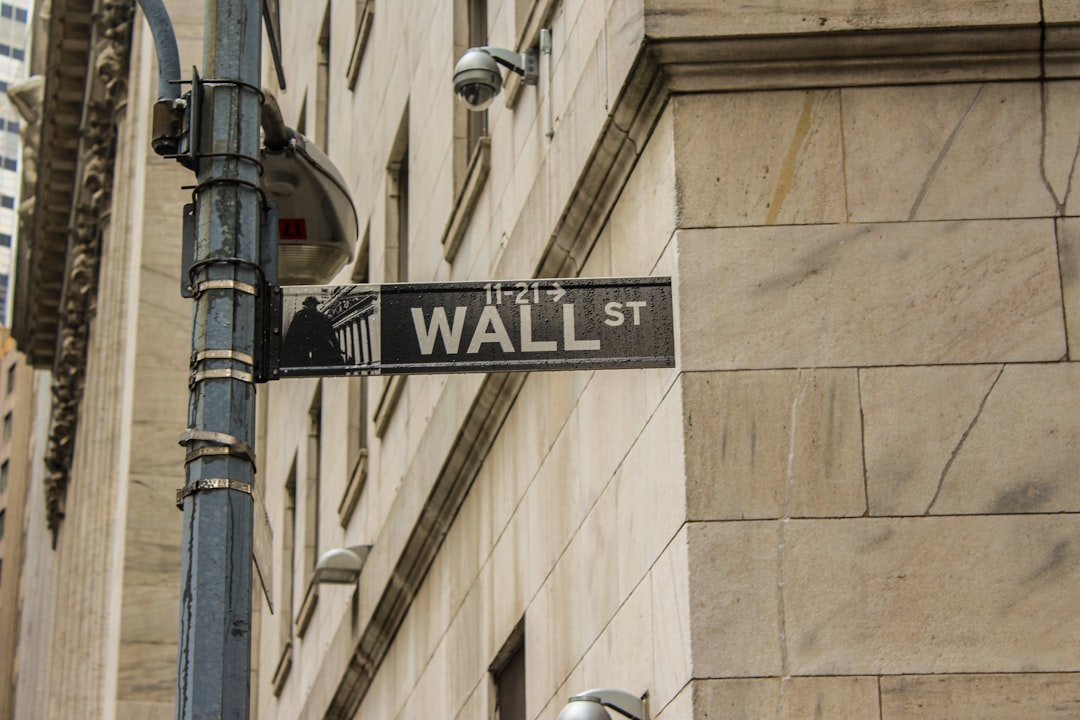
Quantitative hedge fund strategies are investment approaches that rely heavily on mathematical models, statistical analysis, and computational techniques to identify trading opportunities. Unlike traditional hedge funds that may depend on fundamental analysis or qualitative assessments, quantitative strategies utilize vast amounts of data to inform decision-making processes. These strategies can encompass a wide range of methodologies, including statistical arbitrage, trend following, and market making, among others. The core premise is to leverage quantitative analysis to exploit inefficiencies in the financial markets, thereby generating alpha—returns that exceed the market average.
The evolution of quantitative hedge funds can be traced back to the late 20th century when advancements in technology and data availability began to reshape the investment landscape. Pioneers in this field, such as Renaissance Technologies and AQR Capital Management, demonstrated that systematic trading could yield consistent returns by employing rigorous mathematical frameworks. As a result, the quantitative hedge fund sector has grown significantly, attracting both institutional and retail investors seeking to diversify their portfolios and enhance returns through sophisticated trading strategies.
Quantitative hedge fund strategies have gained significant traction in recent years, leveraging advanced algorithms and data analysis to optimize investment decisions. A related article that delves into the evolving landscape of investment management is titled “The Style of Management by Zen Z CEO in Year 2024.” This piece explores innovative management techniques and their implications for hedge funds and other investment vehicles. For more insights, you can read the article here: The Style of Management by Zen Z CEO in Year 2024.
The Role of Data and Technology in Quantitative Hedge Fund Strategies
Data serves as the lifeblood of quantitative hedge fund strategies. The ability to collect, process, and analyze vast datasets is crucial for developing effective trading models. Hedge funds utilize various data sources, including historical price data, economic indicators, social media sentiment, and alternative data such as satellite imagery or credit card transaction data. This diverse array of information allows quantitative analysts to construct models that can predict market movements with a higher degree of accuracy.
Technology plays an equally vital role in the implementation of these strategies. High-performance computing systems enable hedge funds to run complex algorithms and simulations at unprecedented speeds. For instance, cloud computing has revolutionized the way data is stored and processed, allowing firms to scale their operations without significant upfront investments in infrastructure. Additionally, advancements in programming languages such as Python and R have made it easier for quantitative analysts to develop and refine their models, facilitating a more agile approach to strategy development.
Identifying Market Trends and Patterns for Maximizing Returns

Identifying market trends and patterns is a fundamental aspect of quantitative hedge fund strategies. By analyzing historical price movements and trading volumes, quantitative analysts can discern recurring patterns that may indicate future price behavior. Techniques such as time series analysis and technical indicators are commonly employed to identify trends. For example, moving averages can help smooth out price fluctuations and highlight underlying trends, while momentum indicators can signal potential entry or exit points for trades.
Moreover, machine learning techniques have enhanced the ability to detect complex patterns within large datasets. Algorithms can be trained to recognize subtle signals that may not be apparent through traditional analysis. For instance, a hedge fund might employ a neural network to analyze thousands of variables simultaneously, identifying non-linear relationships that could inform trading decisions. This capability allows funds to adapt quickly to changing market conditions and capitalize on emerging trends before they become widely recognized.
Utilizing Mathematical Models and Algorithms in Quantitative Hedge Fund Strategies

Mathematical models form the backbone of quantitative hedge fund strategies, providing a structured framework for decision-making. These models often incorporate various statistical techniques, including regression analysis, stochastic calculus, and optimization algorithms. For example, a common approach is the use of the Capital Asset Pricing Model (CAPM) to assess the expected return of an asset based on its systematic risk relative to the market.
Algorithms are then employed to execute trades based on the signals generated by these models. High-frequency trading (HFT) firms often utilize algorithms that can execute thousands of trades per second based on predefined criteria. These algorithms are designed to capitalize on minute price discrepancies that may exist for only fractions of a second. The precision and speed of algorithmic trading enable hedge funds to gain a competitive edge in the market by executing trades more efficiently than human traders.
Quantitative hedge fund strategies have gained significant attention in recent years due to their ability to leverage data-driven models for investment decisions. For those interested in exploring this topic further, a related article can provide valuable insights into the mechanics and performance of these strategies. You can read more about it in this informative piece on Savanti Investments, which discusses various approaches and their implications for modern investing. For more details, check out this article.
Risk Management and Mitigation in Quantitative Hedge Fund Strategies
| Strategy | Average Annual Return (%) | Volatility (%) | Sharpe Ratio | Typical Holding Period | Leverage Used |
|---|---|---|---|---|---|
| Statistical Arbitrage | 12-18 | 8-12 | 1.2-1.6 | Days to Weeks | 2-5x |
| Trend Following | 10-15 | 15-20 | 0.8-1.2 | Weeks to Months | 1-3x |
| Market Neutral | 6-10 | 5-8 | 1.0-1.4 | Weeks to Months | 1-2x |
| High-Frequency Trading (HFT) | 15-25 | 10-15 | 1.5-2.0 | Seconds to Minutes | 5-10x |
| Machine Learning Models | 12-20 | 10-15 | 1.3-1.7 | Days to Months | 1-4x |
Risk management is a critical component of any investment strategy, particularly in the volatile world of hedge funds. Quantitative hedge funds employ sophisticated risk management techniques to mitigate potential losses while maximizing returns. One common approach is the use of Value at Risk (VaR) models, which estimate the potential loss an investment portfolio could face over a specified time frame at a given confidence level. By quantifying risk in this manner, hedge funds can make informed decisions about position sizing and leverage.
Additionally, diversification plays a key role in risk mitigation. By spreading investments across various asset classes, sectors, or geographic regions, quantitative hedge funds can reduce their exposure to any single point of failure. Furthermore, dynamic risk management strategies allow funds to adjust their portfolios in response to changing market conditions. For instance, during periods of heightened volatility, a hedge fund may reduce its exposure to equities while increasing its allocation to safer assets such as bonds or cash equivalents.
Leveraging High-Frequency Trading in Quantitative Hedge Fund Strategies
Explore diverse opportunities with Savanti’s Tokenized Investment Funds to enhance your portfolio.
High-frequency trading (HFT) represents one of the most advanced applications of quantitative strategies within hedge funds. HFT involves executing a large number of orders at extremely high speeds, often within milliseconds or microseconds. This approach capitalizes on small price discrepancies that exist for very brief periods, allowing firms to generate profits from rapid trades that may not be feasible for traditional investors.
The infrastructure required for HFT is highly specialized and includes co-location services that place trading servers in close proximity to exchange servers to minimize latency. Additionally, sophisticated algorithms are developed to identify trading opportunities based on real-time market data. For example, an HFT firm might employ statistical arbitrage strategies that exploit temporary mispricings between correlated assets. By executing trades at lightning speed, these firms can capture profits before the market corrects itself.
Implementing Statistical Arbitrage for Maximizing Returns in Quantitative Hedge Fund Strategies
Statistical arbitrage is a popular quantitative strategy that seeks to exploit pricing inefficiencies between related financial instruments. This approach typically involves creating pairs or baskets of securities that historically exhibit a stable relationship. When the price relationship deviates from its historical norm, traders can take long positions in undervalued securities while shorting overvalued ones, anticipating a reversion to the mean.
For instance, if two stocks in the same industry historically trade at a ratio of 1:1 but diverge significantly due to market fluctuations or news events, a statistical arbitrage strategy would involve buying the undervalued stock while shorting the overvalued one. The expectation is that as market forces correct the mispricing, both positions will yield profits. This strategy relies heavily on quantitative analysis and requires robust risk management practices to account for potential deviations from historical relationships.
Incorporating Machine Learning and Artificial Intelligence in Quantitative Hedge Fund Strategies
The integration of machine learning (ML) and artificial intelligence (AI) into quantitative hedge fund strategies has transformed how firms analyze data and make investment decisions. ML algorithms can process vast amounts of information far more efficiently than traditional methods, enabling analysts to uncover hidden patterns and insights that may inform trading strategies.
For example, hedge funds may use supervised learning techniques to train models on historical price data alongside various economic indicators. These models can then predict future price movements based on new incoming data. Additionally, unsupervised learning methods can identify clusters or anomalies within datasets that may signal trading opportunities or risks. The adaptability of ML algorithms allows them to continuously learn from new data inputs, enhancing their predictive capabilities over time.
The Importance of Backtesting and Optimization in Quantitative Hedge Fund Strategies
Backtesting is an essential process in developing quantitative hedge fund strategies, allowing analysts to evaluate how a model would have performed using historical data before deploying it in live markets. This process involves simulating trades based on past market conditions to assess the effectiveness of a strategy under various scenarios. By analyzing metrics such as return on investment (ROI), drawdown levels, and Sharpe ratios during backtesting, firms can refine their models and improve their chances of success.
Optimization techniques are also employed during this phase to fine-tune model parameters for maximum performance. For instance, a hedge fund might adjust variables such as entry and exit thresholds or position sizes based on backtesting results. However, it is crucial to avoid overfitting—a scenario where a model performs exceptionally well on historical data but fails to generalize in real-world conditions due to excessive complexity or reliance on noise rather than genuine signals.
Evaluating Performance Metrics and Key Indicators in Quantitative Hedge Fund Strategies
Performance evaluation is critical for assessing the effectiveness of quantitative hedge fund strategies. Various metrics are utilized to gauge performance comprehensively. The Sharpe ratio is one widely used measure that assesses risk-adjusted returns by comparing excess returns relative to volatility. A higher Sharpe ratio indicates better risk-adjusted performance, making it an essential tool for investors evaluating different funds.
Other important performance indicators include alpha and beta coefficients from the Capital Asset Pricing Model (CAPM). Alpha represents the excess return generated by a fund relative to its benchmark index after adjusting for risk factors, while beta measures the fund’s sensitivity to market movements. Additionally, metrics such as maximum drawdown—representing the largest peak-to-trough decline—provide insights into potential risks associated with specific strategies.
Regulatory and Compliance Considerations for Quantitative Hedge Fund Strategies
As quantitative hedge funds continue to grow in prominence within the financial landscape, regulatory scrutiny has increased significantly. Compliance with regulations set forth by governing bodies such as the Securities and Exchange Commission (SEC) in the United States or the Financial Conduct Authority (FCA) in the United Kingdom is paramount for these firms. Regulations often focus on transparency requirements regarding trading practices, risk disclosures, and reporting obligations.
Moreover, as technology evolves rapidly within this sector—particularly with advancements in AI and machine learning—regulatory frameworks must adapt accordingly. Issues surrounding algorithmic trading practices have prompted discussions about market fairness and systemic risks associated with high-frequency trading activities. Consequently, hedge funds must remain vigilant in ensuring compliance with existing regulations while also preparing for potential future changes that could impact their operational frameworks.
In summary, quantitative hedge fund strategies represent a sophisticated intersection of finance and technology that leverages data-driven insights for investment decision-making. As these strategies continue to evolve alongside advancements in machine learning and regulatory landscapes, they will likely play an increasingly pivotal role in shaping the future of asset management.
Savanti Systematic Global Macro Fund
FAQs
What are quantitative hedge fund strategies?
Quantitative hedge fund strategies use mathematical models, algorithms, and statistical techniques to identify trading opportunities and manage investment portfolios. These strategies rely on data analysis and automated systems rather than human discretion.
How do quantitative hedge funds differ from traditional hedge funds?
Quantitative hedge funds primarily use computer-driven models and algorithms to make investment decisions, while traditional hedge funds often rely on fundamental analysis and the judgment of portfolio managers. Quant funds emphasize data and systematic trading approaches.
What types of data do quantitative hedge funds use?
Quantitative hedge funds use a wide range of data, including historical price data, trading volumes, economic indicators, financial statements, alternative data sources like social media sentiment, and market microstructure data to build and refine their models.
What are common quantitative strategies employed by hedge funds?
Common quantitative strategies include statistical arbitrage, trend following, mean reversion, factor investing, and machine learning-based approaches. These strategies aim to exploit market inefficiencies or patterns identified through data analysis.
What are the risks associated with quantitative hedge fund strategies?
Risks include model risk (errors or overfitting in models), data quality issues, market regime changes that invalidate historical patterns, and technological failures. Additionally, crowded trades and liquidity constraints can impact performance during volatile market conditions.